A way to measure the world.
A rotating LiDAR samples distances all around the Jeep. Blue dots show where the simulated scan meets a surface. The learning challenge: turn those measurements into a useful picture of the space ahead.
 Explore the project
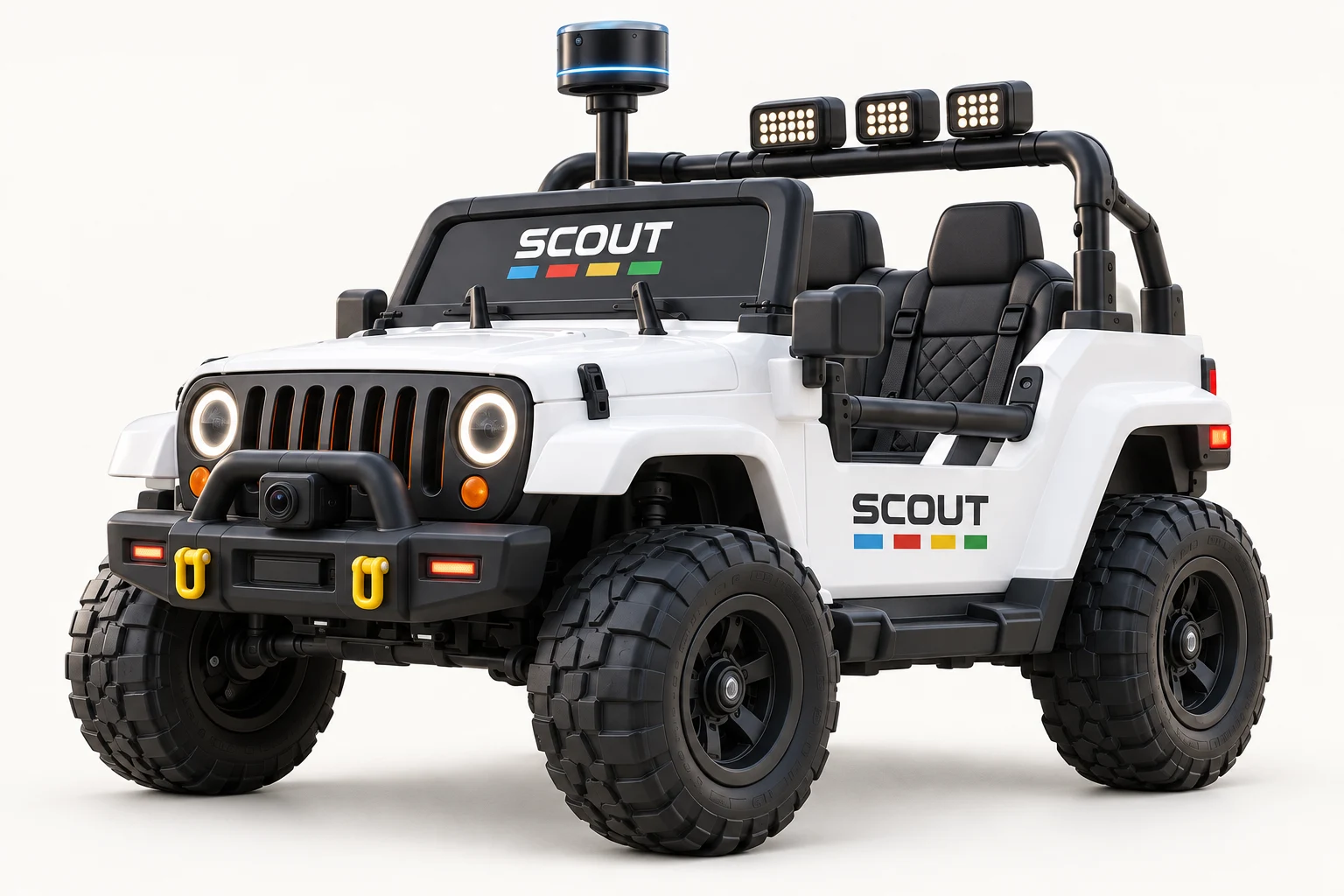
A DIY family rover.
Built by learning,
with a little help from AI.
SCOUT is a DIY hobby project turning a ride-on Jeep into an outdoor companion rover. It explores what you can learn with AI as a research partner, coding helper, and patient explainer. The aim: take a question at the keyboard and turn it into something you can build, understand, and enjoy with family.
The ambition: a little companion for family walks and backyard exploring. Try the simulated Follow and Roam modes to see how sensing could guide the way.
Preparing the backyard…
A little room to explore. Roam illustrates a route around the planter, with space to turn and a boundary to stay within.
Switch on a sensor. See what it adds.A Raspberry Pi, an ESP32, a handful of sensors, and the original ride-on hardware. Each part opens a door into power, code, or mechanics. Pull them apart to see how they fit.
Preparing the component study…
A robot needs energy, information, and a way to act on both. Follow the system concept one connection at a time—from a sensor reading to a turn of the wheels.
CONCEPT ARCHITECTUREFeedback lets the rover compare requested motion with what actually happens. Building it is a learning loop, too: ask questions, use AI to explore an approach, test it in the real world, and bring what you discover back to the workbench.